Dehydrated Onions: Ultimate Guide - Types, Forms, Manufacturing, Benefits & Quality Standards

Dharm Padaliya
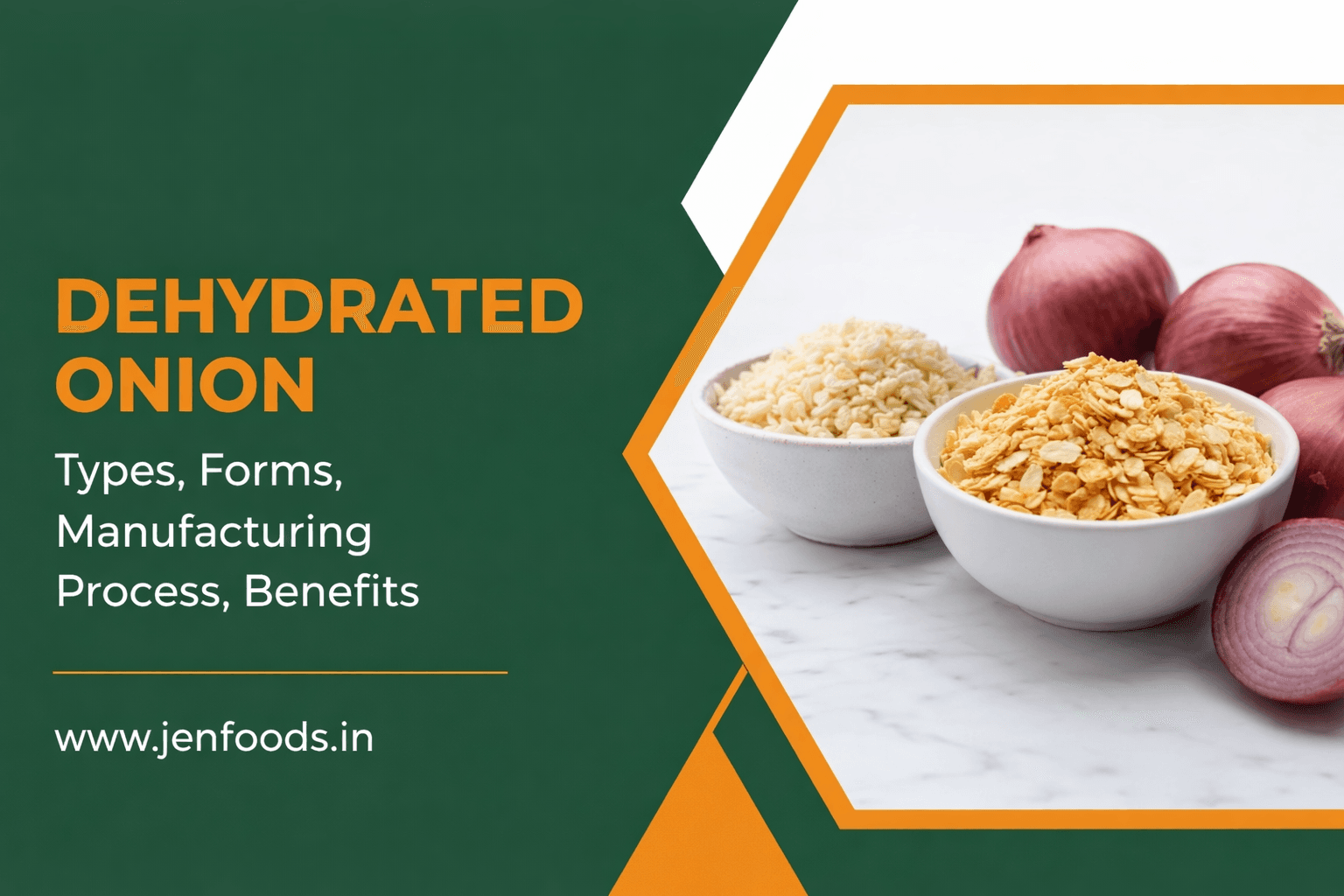
What Are Dehydrated Onions?
Dehydrated onions are fresh onions processed to remove their natural moisture content through advanced drying methods such as hot-air drying, freeze drying, and spray drying. This controlled dehydration transforms perishable onions into long-lasting, lightweight, and flavor-rich ingredients widely used in the food industry.
By locking in natural aroma and taste, dehydrated onions ensure consistent flavor year-round — without refrigeration or spoilage. They replace the need for fresh peeling and chopping, making them highly efficient for industrial kitchens, spice manufacturers, instant food producers, and HoReCa (Hotel, Restaurant & Catering) operations.
Dehydrated onions are one of the most reliable dehydrated food ingredients for scalable, consistent, and hygienic food production across the globe.
Types of Dehydrated Onions
1. Based on Drying Process
- Hot-Air Dried Onions – Most cost-efficient and common. Ideal for onion flakes, granules, and minced products with balanced flavor retention.
- Freeze-Dried Onions – Premium-grade dehydration preserving taste and texture; perfect for gourmet spice blends and ready-to-eat premium foods.
- Spray-Dried Onion Powder – Ultra-fine, free-flowing powder best suited for instant soups, snack seasoning, and dry spice formulations.
2. Based on Onion Variety
- White Onion – Light color and mild flavor; preferred for onion powder and granules.
- Yellow Onion – Balanced taste with sweet-savory notes; commonly used for dehydrated onion flakes.
- Red Onion – Rich aroma ideal for specialty seasoning, though color retention may reduce after dehydration.
Common Commercial Forms of Dehydrated Onion
- Onion Powder: Fine mesh powder used in packaged seasonings and instant food lines.
- Onion Granules: Mid-size particles ideal for sauce factories, dry rubs, and snack seasoning.
- Onion Flakes: Larger flakes used in soups, sauces, biryanis, and spice mixes.
- Minced/Chopped: Precise cut sizes for ready meals and high-volume culinary uses.
- Each form delivers optimized rehydration, uniform dispersion, and predictable flavor - essential for industrial food production and consistent product quality.
Dehydrated Onion Manufacturing Process
The production of high-quality dehydrated onion ingredients follows a strict, step-by-step process ensuring food safety and purity:
- Selection & Sorting: Only mature, high-grade onions are selected for dehydration.
- Cleaning & Peeling: Multi-stage washing removes dirt, skins, and microbiological impurities.
- Cutting & Slicing: Onions are sliced into the desired sizes (flakes, chopped, minced) before drying.
- Controlled Drying: Onions are dehydrated in hot-air or freeze dryers under precisely monitored conditions.
- Cooling & Sieving: Products are cooled, sorted, and sieved to achieve precise granule sizes.
- Packaging: Oxygen-barrier and moisture-proof packaging extends product shelf life.
- Quality Checks: Routine testing for moisture (<5%), microbial load, and sensory quality ensures FSSAI, ISO, and international compliance.
Key Benefits of Using Dehydrated Onions
1. Long Shelf Life
Dehydrated onions can last 12–24 months, reducing storage waste and eliminating the risk of rot or decay.
2. Labor & Time Efficiency
No more peeling, cutting, or cleaning — ideal for mass catering, processed foods, and instant recipe mixes.
3. Consistent Flavor Supply
Uniform savory taste irrespective of season, ensuring recipe reliability for large-scale production.
4. Cost-Effective Supply Chain
Lower freight weight, easier bulk storage, and a stable price structure make it a preferred choice for dehydrated garlic and vegetable spice exporters.
5. Versatile Industrial Ingredient
Used across multiple sectors — snacks, ready meals, sauces, soups, seasoning powders, meat marinades, and packaged spice blends.
Dehydrated Onion & Garlic: A Dynamic Duo in Food Manufacturing
Combining dehydrated onion and dehydrated garlic powder enhances the base flavor and aroma of food products. This blend powers everything from instant noodles and spice premixes to plant-based food formulations. It also ensures longer storage stability, enhanced hygiene, and better cost efficiency for global food processors.
Final Insight
Dehydrated onions are more than just an ingredient. They represent industrial efficiency, flavor consistency, and food safety in modern food manufacturing. For food processors, exporters, and bulk buyers, sourcing from a reputable dehydrated onion manufacturer ensures reliable supply, compliance, and quality at every stage.